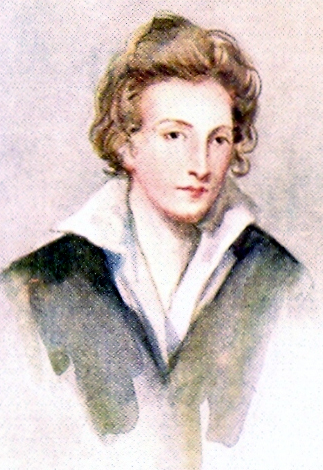
In this manifesto, Shelley praises Sir Francis Bacon for increasing "the powers of man" by initiating the perfection of "the mechanical sciences" but complains that the existing "forms of society" prevent these newly acquired powers from being applied in a utilitarian way to increase the overall happiness of society.
Fortunately, continues Shelley, the "political philosophers" have laboured to overcome the problem by thinking up new forms of society based on liberty and equality. Shelley puts his liberal/technocratic vision as follows:
"Modern society is thus an engine assumed to be for useful purposes, whose force is by a system of subtle mechanism augmented to the highest pitch, but which, instead of grinding corn or raising water acts against itself and is perpetually wearing away or breaking to pieces the wheels of which it is composed. The result of the labours of the political philosophers has been the establishment of the principle of Utility as the substance, and liberty and equality as the forms according to which the concerns of human life ought to be administered."
I think we need to pause and carefully consider what Shelley is arguing for. Shelley believes that human society is to be thought of like a machine, one made powerful by man's increase in power over nature, and that this machine is to be geared to whatever is thought to increase utility, which can only, in Shelley's mind, mean that human life is to be administered according to the forms of liberty and equality.
Note how society itself is assumed to exist to fulfil a kind of Baconian mission of increasing power via technological organisation. Shelley might have been a poet of the romantic era, but this is already that rationalist, technocratic view of society that James Kalb writes about ("Liberal modernity tries to turn the world into a machine for manufacturing satisfactions")
The traditionalist mind doesn't conceive society this way, as a technology to procure an end according to a formula. A human society is, for us, a body of people to which we belong, one that carries with it a tradition, a culture, and a history. It has a value in what it is and as the larger body within which we express our social being.
The forms exist, in part, to maintain the society, but they also express aspects of our social natures. The family, for instance, exists not only to produce the next generation, and to enculturate this generation to successfully carry on a tradition, but it also allows men to fulfil that part of their masculine nature which is expressed in being a husband and father, and a woman likewise to experience being a wife and a mother. Each family also has the potential to embody a good within its own existence: it has a value in being a unique expression of human community.
Therefore, if a Shelleyan liberal were to say "the family fails as a form of society because it does not administer human life according to the principles of liberty and equality" a traditionalist would not see this as failure, as family is supposed to allow us to express aspects of our natures as men and women; to secure a future for a lineage, a nation and a tradition; and to be a unique and meaningful community in itself, one that helps to form identity, attachments, loyalties, commitments and a connection to past and future generations.
Society is not a machine to administer human life according to a single level formula. It is not a technocratic system to give power to such a formula. The pity, again, is that Shelley's view was to become the modern one; to give Shelley credit, he picked up very early on where liberalism would, if followed in a principled way, take a society.
(I had intended this post to be focused on Shelley's understanding of equality but got sidetracked. Will return to this topic soon.)
A note to Melbourne readers. If you are sympathetic to the ideas of this website, please visit the site of the Melbourne Traditionalists. It's important that traditionalists don't remain isolated from each other; our group provides a great opportunity for traditionalists to meet up and connect. Details at the website.

