Showing posts with label gnosticism. Show all posts

Friday, September 30, 2022

A kingdom of women warriors

The modern world is doubling down on the idea of women as warriors. This was foreshadowed as far back as the 1970s, with the advent of second wave feminism. The deal back then was that women could be shown bringing down men, as long as they remained glamorously and sexily feminine. You could see this on popular TV shows of the era like "Charlie's Angels" and "Wonder Woman".
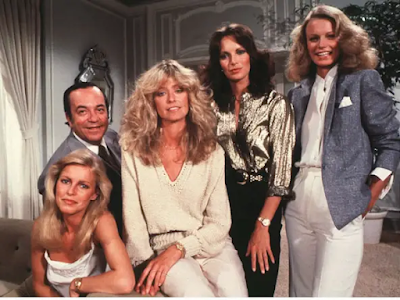
Charlie's Angels - 1970s


Since then, there have been multitudes of female characters kick boxing their way across movie and TV screens, with a decreasing emphasis on feminine glamour. That has now progressed to the idea that female warriors were common in real history not just in fiction. I had a lengthy debate with one person on social media who claimed, in all seriousness, that half of the Viking warriors were female (on the basis of one contested grave find). And now, unsurprisingly, a film ("The Woman King") has been released about the Agojie, an all female warrior unit which operated in the Kingdom of Dahomey on the west coast of Africa.

More on the film later. The first issue is why our culture thinks it so important to establish the idea of women as warriors. My first answer is straightforward. If you are a liberal, and you believe that the predetermined aspects of life, such as our sex, are a limitation on our freedom to self-define, then you will want to erase sex distinctions. One powerful way of doing that is to assert that men can be just as emotional and nurturing as women, and women just as capable as men of acting as warriors. 

One of the disturbing consequences of holding such a belief is that it suggests that unless women can be shown to have such masculine qualities that they are somehow lacking. Women manifesting the best feminine qualities no longer suffices, as this will be thought to still support a distinction of sex. Everything comes to rest on the "girl boss" phenomenon. To put this another way, it will be assumed that supporting women means supporting a masculinised version of women.

Rey from Star Wars 2015

There is also a second possible explanation for the "women as warrior" ethos. There is an emphasis within Gnostic thought that "we are not our bodies". Instead of a positive picture of the material world as God's creation, in which aspects of the divine order inhere, Gnostics see the material world as a merely corrupted material form which has to be overcome. In this world view, our physical bodies do not point in a positive way to our ends or purposes as men and women, but are merely the limiting flesh caging our real selves. Our embodiment limits us, in this view, and therefore needs to be transcended. 

And what about the Agojie? Well, it is true that the Kingdom of Dahomey did have such a female warrior corps. However, the film that has recently been released about the Agojie has highlighted some inconvenient truths about the Kingdom of Dahomey. It turns out that this kingdom would raid neighbouring areas, capture men and women, keep some of them as slaves, sacrifice some of them on an annual festival day and sell others to the North Atlantic slave trade.

The Kingdom of Dahomey existed in what is now the country of Benin from about 1600 to 1904. It was a militarised kingdom that focused considerably on slavery:

Both domestic slavery and the Atlantic slave trade were important to the economy of Dahomey. Men, women, and children captured by Dahomey in wars and slave raids were sold to European slave traders in exchange for various goods such as rifles, gunpowder, textiles, cowry shells, and alcohol. 

Other war captives who were not intended to be sold to Europeans remained in Dahomey as slaves. There, they worked on royal plantations that supplied food for the army and royal court.

There was a history of human sacrifice using slaves.

The human sacrifice would happen once a year during the "Annual Customs" celebrations:

Since Dahomey was a significant military power involved in the slave trade, slaves and human sacrifice became crucial aspects of the ceremony. Captives from war and criminals were killed for the deceased kings of Dahomey. During the ceremony, around 500 prisoners would be sacrificed. As many as 4,000 were reported killed in one of these ceremonies in 1727. Most of the victims were sacrificed through decapitation, a tradition widely used by Dahomean kings, and the literal translation for the Fon name for the ceremony Xwetanu is "yearly head business". 

The European who has been called "the greatest slave trader", the Portuguese/Brazilian Francisco FĂ©lix de Souza, held an honoured place in Dahomey, being awarded the status of chieftain. Even today there is a statue of him in the port city of Ouidah in Benin (he also has a plaza named after him and a museum).

The British attempted to suppress these practices in Dahomey in the mid-nineteenth century:

Dahomey became an adversary to the British Empire after the abolition of slavery during the 19th century. The British sent diplomatic missions to Dahomey, in an effort to convince King Ghezo to abolish human sacrifice and slave trading. Ghezo did not immediately concede to British demands, however he attempted to maintain friendly relations with the British by encouraging the growth of new trade in palm oil instead. In 1851, the Royal Navy imposed a naval blockade against Dahomey, forcing Ghezo to sign a treaty in 1852 that immediately abolished the export of slaves. However, the treaty was broken and slave trading efforts continued in 1857 and 1858.

Historian Martin Meredith quotes Ghezo telling the British,
The slave trade has been the ruling principle of my people. It is the source of their glory and wealth. Their songs celebrate their victories and the mother lulls the child to sleep with notes of triumph over an enemy reduced to slavery.

Dahomey collapsed during the second Franco-Dahomean War that took place in the early 1890s. Despite being equipped with quality German guns, the Dahomey army could not match a much smaller French force. The Agojie did fight fiercely, but not very effectively:

Between 2,000 and 4,000 Dahomean soldiers—including both men and women—died during the seven-week war. Of the roughly 1,200 Agojie in fighting shape at the beginning of the war, just 50 or 60 remained ready for battle by its end. Comparatively, the French side lost 52 Europeans and 33 Africans on the battlefield. 


A note to Melbourne readers. If you are sympathetic to the ideas of this website, please visit the site of the Melbourne Traditionalists. It's important that traditionalists don't remain isolated from each other; our group provides a great opportunity for traditionalists to meet up and connect. Details at the website.
 

Saturday, June 11, 2022

More reasons why

Why might young people wish to transition? The official answer is that they were born in the wrong body, so that the solution is to change bodies. Last month I looked at the life stories of two young people who had once been "trans" but who had then decided to de-transition. Neither of them thought that the real reason for wanting to transition was being born in the wrong body. 

The first de-transitioner I looked at gave a very articulate account of what was running through his mind at the time. He described a modern-day Gnosticism:

The world is wicked, and it is that way because it was made wicked by the Enemy...[the "White Supremacist Capitalist Cis-Hetero-Patriarchy"]

One has to understand the nature of the world’s evil before one can repair it. The first step in obtaining that knowledge is realizing that our bodies are not us, but things which we're trapped inside of. We're not humans; we're ghosts haunting rotting corpses. To stop the Enemy, trans people need to make us all understand that our true selves don’t exist in our corrupted material forms. This is what gender identity actually means: We are not our bodies.

The end goal is a very familiar one centred on a utopian vision of individual autonomy:

The dream of the trans movement is of a world where no one has to do anything they don't want, where no one is forced to work, where everyone can indulge their every desire without fear or shame, where all distinctions between people have been abolished and we're all completely equal. In a word: Utopia.

I was reminded of this reasoning when I read a story about an English girl named Kate. She was driven out of her school for questioning the trans movement. She politely questioned the movement because she recognised similarities between it and her own experience of anorexia:

'I couldn't help but hear the anorexic mentality reverberate in conversations about gender dysphoria,' she says.

'Both anorexia and gender dysphoria [make people] aspire to reach an idealised form of the self, liberated from the grotesque realities of material existence. Both are driven by a desire to control one's reality — to unveil a potential 'truth'.

Again, you can recognise a gnostic quality to this: a belief that our material existence is both wicked and illusory and that it is possible to attain special powers through access to a hidden knowledge. 

Then there are the words of this trans person:

This person wants to use fae/faer pronouns, which I understand indicates a desire to identify as a fairy. What's noteworthy is what is said at the end:
I'm excited because fae/faer pronouns make me feel very affirmed in my not feeling like a person.

It is more evidence for what our first de-transitioner claimed, that as a trans person he believed that "our bodies are not us, but things which we're trapped inside of. We're not humans..."

What does all this suggest? Well, Gnosticism is an ancient belief and likely to be always with us. However, it doesn't help that there is overlap between Gnosticism and certain aspects of liberal modernity.

The more traditional Western view is that we are part of a divinely created order and made, in fact, in the image of God. There may be both good and evil within nature, growth and decay; benevolence and cruelty, but we nonetheless find within our own creatureliness a connection to a higher meaning that gives form and substance to our lives. Gnosticism does not find fertile soil within this traditional view and, unsurprisingly, was condemned as a heresy by the early Christian church.

Liberal modernity has tended to divorce man from this meaningful relationship to creation. Patrick Deneen, in his book Why Liberalism Failed, sketches the history of how this came about. Early moderns sought dominion over nature. At first, this was not meant to be a dominion over our own nature (which was conceived negatively as fundamentally self-interested):

Liberalism...embraced and advanced as well an economic system - market-based free enterprise - that similarly promoted human use, conquest, and mastery of the natural world. Early-modern liberalism held the view that human nature was unchangeable - human beings were, by nature, self-interested creatures whose base impulses could be harnessed but not fundamentally altered.

But a second-wave of liberals in the later 1800s did seek to extend this dominion over the natural world to include our own nature. Deneen observes that these two waves of liberalism are still represented within modern politics:

First-wave liberals are today represented by "conservatives," who stress the need for scientific and economic mastery of nature but stop short of extending this project to human nature. They support nearly any utilitarian use of the world for economic ends...Second-wave liberals increasingly approve nearly any technical means of liberating humans from the biological nature of our own bodies.

The liberal project is to maximise individual autonomy in the name of freedom. This is made possible by removing humans from an embedded place within a given realm of nature:

Liberalism...seeks to transform all of human life and the world. Its two revolutions - its anthropological individualism and the voluntarist conception of choice, and its insistence on the human separation from and opposition to nature - created its distinctive and new understanding of liberty as the most extensive possible expansion of the human sphere of autonomous activity.

And so we all become self-creating autonomous individuals, unwilling to acknowledge any limitations imposed by our created nature. This is a more fertile ground for Gnosticism to flourish and to exert an influence within modern culture.

Wednesday, August 27, 2014

Was Locke a Gnostic?

Has Gnosticism played a role in the decline of the West? I've just read an excellent article by Mark Shiffman (from 2009) which provides a good argument that the answer might be yes.

It's difficult to summarise the article adequately but I'll try. The traditional Christian view sees God's creation as a good thing:
The doctrine of creation presented in the Book of Genesis tells us that the world is good, that human beings receive this world as an undeserved gift, and that this makes them dependent upon their creator and bound in humility to acknowledge this gift with gratitude.

Gnostics, however, reject this outlook as suggesting limits and dependence and see the spirit or will as being "trapped" within such a created world.

Mark Shiffman argues persuasively that one of the fathers of liberal modernity, John Locke, was a gnostic in this sense. A gnostic outlook is assumed, first, in his economic theory:
In chapter five of his Second Treatise, Locke defends the individual right to property by arguing that the entire value of commodities derives from human labor. After reflecting a bit on the complexity of human economic activity, Locke ends up estimating that human labor contributes all but about 1/1000 of the value of things, whereas “Nature and the Earth furnished only the almost worthless materials.” The given world is essentially worthless, except as a source of the raw materials for human making...the attitude of Locke and Marx toward the given world can hardly be described as one exhibiting gratitude and reverence. It’s all what we make of it.

Second, Locke carried over this argument into his theory of the human person. Our own body and mind is worthless raw material until we labour on it through our will:
This is the sense in which Locke understands human beings as being their own individual property. All that they are that is of any value results from the labor they exercise upon themselves. Parents are, at best, the enablers of our self-creation, providing us with the material that is nearly worthless until improved by our own efforts.

In short, just as nature and the earth constitute the worthless world whose value lies in what humans can make of it, so too my body and mind are initially parts of that worthless world. It is when my will reshapes all this and turns it into some embodiment of itself that I lay claim to it. The world as given is essentially worthless, and the value things have results from our laboring to make the worthless material suitable to our wishes. It is the will that imparts value both by determining what will make something valuable and by causing that valuable something to be built up in it.

Pope Benedict (as Cardinal Ratzinger) wrote of Gnosticism that:
Human beings want to understand the discovered world only as material for their own creativity…. Gnosticism will not entrust itself to a world already created, but only to a world still to be created.

I've pointed out before that modern liberals reject most aspects of our created nature, but the one aspect they retain is that of the creative spirit. The argument put forward above helps to explain why liberals would have this focus.

Wednesday, March 24, 2010

Girl cell feminism

Eve Ensler has written a new feminist work titled "I am an emotional creature". At first, I thought it a departure from the usual feminist approach. Eve Ensler appears to be arguing that women are more emotional and intuitive and less intellectual than men and that this is something that gives them a special knowledge and experience of the world:

I AM AN EMOTIONAL CREATURE

I love being a girl.
I can feel what you're feeling
as you're feeling it inside
the feeling
before.
I am an emotional creature.
Things do not come to me
as intellectual theories or hard-shaped ideas.
They pulse through my organs and legs
and burn up my ears ...

I know when a storm is coming.
I can feel the invisible stirrings in the air.
I can tell you he won't call back.
It's a vibe I share.

This doesn't sound like the orthodox feminist position. Usually feminists push an "anti-essentialist" line. This means that they reject the idea that men and women have distinct masculine and feminine natures.

There are a couple of reasons for feminists to be anti-essentialist. First, feminists usually accept the liberal idea that autonomy is what matters. This means that feminists are committed to rejecting whatever is predetermined in favour of what is self-determined. Our sex is predetermined, so it can't be accepted as something that naturally forms a part of a person's identity. At best, it can be something that an individual chooses to "perform" as a kind of subversive act.

Second, feminists have looked on the traditional feminine role within the home and judged it to be less autonomous, and therefore inferior, to the male career role. This then leads feminists to reject the idea that the traditionally feminine role is natural, which then leads to the idea that "the patriarchy" created sex roles as a social construct in order for men to benefit from women's oppression.

So the feminist emphasis is usually on the idea that masculinity and femininity are limitations or restrictions imprisoning the individual, and/or that femininity is an oppressive social construct foisted upon women by the patriarchy which should be abolished forthwith.

Some feminists have even gone beyond this by denying that humans can be divided into two sexes, male and female. The most influential is Anne Fausto-Sterling, the academic referred to by Leonard Sax in the following quote:

A tenured professor at Brown University recently published a book in which she claims that the division of the human race into two sexes, female and male, is an artificial invention of our culture. "Nature really offers us more than two sexes," she claims, adding, "Our current notions of masculinity and femininity are cultural conceits." The decision to "label" a child as a girl or a boy is "a social decision," according to this expert. We should not label any child as being either a girl or a boy, this professor proclaimed. "There is no either/or. Rather, there are shades of difference."

According to Anne Fausto-Sterling it is a "cultural conceit" to believe that humans are born either male or female. Eve Ensler, on the other hand, not only believes that a feminine nature does exist, she appears to consider it a positive aspect of a woman's life.

The two positions seem poles apart. Unfortunately, they are closer than you might think.

It turns out that Eve Ensler has the following argument. In every one of us, male and female, there is a grouping of cells, the "girl cells". These are central to human evolution and the future of the human race. But the patriarchy has decided to oppress and kill off the girl cells, thereby threatening the continuation of life. The girl cells are responsible for empathy, openness, vulnerability, intuition and relationships. Vulnerability is our greatest strength and girl cell emotions have inherent logic which leads to radical and saving action. It is the patriarchy which has brought up people not to be girls.

It is the suppression of girl cells by the patriarchy which has led us to the complete destruction of the earth and to mass rape in the Democratic Republic of the Congo.

Boys have been treated harshly by the patriarchy because their girl cells have been suppressed. If men cried like girls and could enjoy their girl self there wouldn't be violence, as bullets are hardened tears. Men just pretend to know things and they hide that they are in a mess.

Girls are oppressed everywhere by the patriarchy. They're silenced, sold, killed, enslaved, raped, and robbed of being the subjects of their lives. But girls are the key to the future of the whole of humanity. Girls will determine whether the species survives.

It's wrong for girls to be feminine and to want to please. This has been forced on them. They should be re-educated to want to confront, deny and agitate. This is "engaging your girl". We should admire girls who demand to have their faces covered in tattoos, or who sail solo around the world, or who live by themselves in the wild, or who stand in front of tanks, or who violently defend themselves.

Can you see the problem here? Eve Ensler does not accept masculinity and femininity as they really exist. Masculinity she rejects as something hurtful and hateful which threatens existence. She wants men to live instead by their girl selves.

And although she says some nice things about "girl cells" and talks positively about empathy and intuition, she doesn't really like feminine women. She doesn't like it when girls aim to please and she is uninterested in women as wives or mothers. The qualities she actually admires in girls don't sound very girlish at all. Furthermore, she thinks that girls can be socially reconstructed to be the way she wants them to be.

There's a gnostic undertone to her argument. She portrays the world as a false one which has inverted reality. We can undergo a transformative, redemptive experience, conquer evil and save the world from destruction by understanding the "girl cells" key to knowledge.

It has an air of unreality to it. She is in campaigning mode and masculinity and femininity are treated in terms of her campaign and not on their own terms.

She is not in a serious and consistent way a gender essentialist, even if she does offer a variation on the usual feminist arguments.

Saturday, January 16, 2010

Prophets of change

Lawrence Auster has been leading an interesting discussion of gnosticism over at View from the Right. The influence of gnosticism on the modern world is certainly worth considering. Two of the most influential liberal thinkers of the period 1860 to 1930 were self-declared gnostics, not only in the political sense, but more directly in terms of their religious beliefs. Both men rejected Christianity and sought to replace it with a religion which combined humanism and gnosticism.

The two men were J.S. Mill and H.G. Wells.

Mill thought it possible to hold in conjunction a belief in a "religion of humanity" with a belief in Manichaeism - a gnostic religion centred in Persia which thrived for several hundred years (3rd - 7th centuries A.D.)

Wells's religious beliefs have been described in detail in an impressive article by Willis B. Glover. Like Mill, Wells rejected Christianity:

Wells ... reacted violently, even as a child, against the evangelical faith of his mother. This hostility continued throughout his life and included both Protestant and Catholic Christianity. (p.121).

Wells was so opposed to Christianity that he envisaged strict methods to circumscribe it in his future utopia:

Wells does not hesitate to picture an ideal society of the future in which the propagation of the Christian faith, if persisted in, would be punishable by death; and he justifies this by analogy with legal requirements for vaccination. (pp.123-124)

In 1917, Wells advanced his ideas for a "modern religion" in his work God the Invisible King:

The content of the religion which Wells heralded with such confidence and enthusiasm is an amazing concoction of humanism, Christianity, Gnosticism and a kind of Promethean dualism to which Wells later called particular attention as giving him affinity with the Manichaeans. (p.125)

There is a lengthy description of the theology of this religion on pages 125 to 128. It includes an opposition between a "Veiled Being," who is the author of nature, and a finite God whom we are to worship:

Wells begins by distinguishing the God of his faith from the "Veiled Being" who is behind and in some sense responsible for the universe in which man finds himself ... the Nature for which this being must be held responsible is the real enemy of man, the source of his suffering and the obstacle in the way of his progress.

The God of H.G. Wells was a finite God who had a beginning in time but who was outside space. God was a person who was the Captain of Mankind ... God had come into existence "somewhere in the dawning of mankind" and "as mankind grows he grows".

With our eyes he looks out upon the universe he invades; with our hands he lays hands upon it ... He is the undying human memory, the increasing human will.

The enemy ... was Nature ... God stands over against not merely the ultimate being who is referred to as Darkness or the Veiled Being, but also against the Life Force, which is a lesser being coming out of the Veiled Being ...

... for the present God and mankind are in a state of opposition to the universe and to the Life Force within it. God is described as an unfilial, Promethean rebel ...

Wells frankly accepted the dualistic character of his religion and even after the failure to launch a new religion of mankind he referred to his own religious outlook as Promethean, Manichaean, and Persian.

As Glover notes, the new religion didn't take off and Wells retreated from pushing a theology.

What would this kind of religious gnosticism have contributed to? Possibly to a radical rejection of the world we live in as being false, dark and oppressive, a creation of the Veiled Being and the Life Force, from which we seek to escape as a species as the agents or co-workers of a divine purpose.

If this is your religious view, then it makes sense to be hostile to tradition, to look for a revolutionary change in the conditions of life (a transfiguration of reality) and to want a central world government to direct human affairs.

You get a sense of this in an article about Wells by Fred Siegel titled The Godfather of American Liberalism. Wells appears to have had a significant influence on American (and Anglosphere) thought:

By 1920, The Nation could describe Wells as “the most influential writer in English of our day.” ... For many, noted historian Henry May, Wells was “the most important social prophet.” The social critic Randolph Bourne described Wells’s “religious” impact, his “power of seeming to express for us the ideas and dilemmas which we feel spring out of our modernity”—a power that was nothing less than “magical.”


And this:

Orwell nonetheless recognized Wells’s extraordinary impact. “I doubt whether anyone who was writing books between 1900 and 1920, at any rate in the English language, influenced the young so much,” Orwell wrote. “The minds of all of us . . . would be perceptibly different if Wells had never existed.”

And this:

“Without doubt,” wrote Brooks, “Wells has altered the air we breathe and made a conscious fact in many minds the excellence that resides in certain kinds of men and modes of living and odiousness that resides in others.”

This too:

Other major public figures in the U.S. acknowledged Wells’s impact. Margaret Sanger ... believed that the author had “influenced the American intelligentsia more than any other one man.” The naturalist Joseph Wood Krutch, looking back on the 1920s, noted of Wells that “a whole surviving generation might appropriately sing in the words of the popular ballad of their days, ‘You made me what I am today.’ ” To assess Wells and George Bernard Shaw, Krutch asserted, “would come pretty close to assessing the aims, the ideals, the thinking and one might almost say, the wisdom and folly of a half-century.”

Wells's influence was for transformative change. Literary critic Floyd Dell wrote:

Suddenly there came into our minds the magnificent and well-nigh incredible conception of Change. . . . gigantic, miraculous change, an overwhelming of the old in ruin and an emergence of the new. Into our eternal and changeless world came H. G. Wells prophesying its ending, and the Kingdom of Heaven come upon earth; the heavens shall be rolled up like a scroll, and all the familiar things of earth pass away utterly—so he seemed to cry out to our astounded ears.

Wells himself placed great hope in Theodore Roosevelt as an agent of change:

“My hero in the confused drama of human life,” Wells wrote in The Future in America, “is intelligence; intelligence inspired by constructive passion. There is a demi-god imprisoned in mankind.” ... Wells presented TR as the demigod incarnate, the very symbol of “the creative will in man.” Here was the man of the future—“traditions,” noted Wells, “have no hold on him” ... “I know of no other,” said Wells, “a tithe so representative of the creative purpose ...

There's not much room in this for a sympathetic defence of tradition in general, let alone particular national traditions. It's all to be cast off to liberate the "creative will" or the "creative purpose" in man. 

Wells is an example of an influential thinker within the liberal tradition, whose gnostic and humanistic beliefs set him radically at odds with real, existing, particular traditions.

Tuesday, January 12, 2010

All creatures

I've just returned from a summer beach holiday at Apollo Bay. We're blessed with great beaches here in Australia and Apollo Bay is no exception: the sea was that inviting turquoise colour and swimming in the surf there late in the day was a great invigorating pleasure.

I usually try to do a bit of light reading on these beach holidays. This year I picked up an omnibus edition of James Herriot's All Creatures Great and Small. I had watched the TV series many years ago and was curious to finally read the book.

I wasn't disappointed. For those who don't know, James Herriot (real name Alf Wight) began his veterinary career in rural Yorkshire in the late 1930s. At a relatively late age, he began to write some semi-autobiographical stories about his experiences. They were first published with great success in the US in the early 1970s.

What's appealing about the stories? James Herriot was obviously highly responsive to nature and he writes with an obvious love of the countryside in the Yorkshire Dales. He also identified with the local population and warmly observed both their virtues and their foibles. The sense of people and place is unusually strong in his stories.

The importance of personal character also comes through, with the quirks of individual character something to be borne largely with good humour. Adversity in life is recognised, but the overall attitude is one of gratitude and appreciation.

All of which sets Herriot outside the trend toward the mass, undifferentiated society. Herriot's world has a real, concrete setting in the Yorkshire Dales.

It also sets Herriot apart from the whole "gnostic" trend, in which the actual, existing world is thought to be a false, oppressive, illusory one that we must seek liberation from. The gnostics can only see tradition as something hateful to be overthrown; Herriot was able to look at it more sympathetically, as the transmission of a particular way of life that gave a distinct character to a local culture he identified with.


Top: the town square in Thirsk where Herriot's veterinary surgery was located


Bottom: St Mary's in Thirsk, a beautiful medieval church where James Herriot was married