Most leftists today are opposed to masculinity, often prefacing it with the adjective "toxic". Their opposition makes sense given their understanding of both freedom and equality.
If you understand freedom as a self-determining, self-positing individual autonomy, then masculinity will be looked on negatively as something predetermined that is limiting to the individual.
As for equality, moderns see this as a levelling process, in which the emphasis is on "sameness" - we are ideally to stand in the same relation to each other, which then requires distinctions to be negated, at least in certain political contexts.
So leftists will sometimes reject masculinity because it is associated with inequality: masculinity is thought to have been constructed as a means to give men privilege and dominance and to oppress women. And sometimes leftists reject masculinity because it is restrictive, e.g. because of the implication that there are social roles or ways of being in the world that are for men alone.
These attitudes have been around for a long time now. In one of the earliest feminist tracts, The Vindication of the Rights of Woman (1791), Mary Wollstonecraft writes,
A wild wish has just flown from my heart to my head, and I will not stifle it, though it may excite a horse-laugh. I do earnestly wish to see the distinction of sex confounded in society... For this distinction...accounts for their [women] preferring the graceful before the heroic virtues.
Here you can see the modern understanding of both liberty and equality. She wants to level down the distinctions between the sexes (equality) because she wants to choose a masculine way of being (liberty).
Similarly, we have Shelley
writing in 1811, in reference to men and women:
these detestable distinctions will surely be abolished in a future state of being.
Given this long entrenched approach to masculinity, it is of particular interest that a leftist journalist, Christine Emba, has questioned the modern rejection of masculinity. She has written an opinion piece for The Washington Post ("Men are lost. Here's a map out of the wilderness" July 10, 2023), in which she calls for a more positive embrace of the masculine. Why would she go against the current of leftist thought in this way?
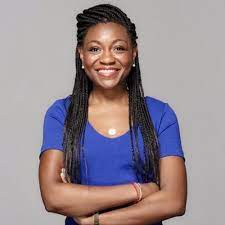 |
| Christine Emba |
She gives multiple reasons and these should interest us because they indicate some of the deficiencies in modern ways of thinking about our sex.
First, as a heterosexual woman she is concerned that unmasculine men are unattractive dating prospects:
She quotes a podcaster, Scott Galloway, who makes the point that women who want men to be more feminine often don't want to date such men:
“Where I think this conversation has come off the tracks is where being a man is essentially trying to ignore all masculinity and act more like a woman. And even some women who say that — they don’t want to have sex with those guys. They may believe they’re right, and think it’s a good narrative, but they don’t want to partner with them.”
I, a heterosexual woman, cringed in recognition.
She wrote the piece, in part, because of laments from female friends about the lack of dating opportunities:
It might have been the complaints from the women around me. “Men are in their flop era,” one lamented, sick of trying to date in a pool that seemed shallower than it should be.
So here is a fundamental problem with the leftist rejection of the masculine. Heterosexuality is, by definition, an attraction of the masculine and the feminine. Women will therefore be sexually attracted to masculine qualities of men. Furthermore, it is through their masculine drives that men make commitments to women and to family. So the political commitments of leftist women (to modern understandings of liberty and equality) are set against fundamental aspects of their own being as women (their sexuality and desire for committed relationships with men).
Second, Christine Emba is concerned that men are struggling. She makes the good point that women should be concerned for the welfare of the men they are closely connected to:
The truth is that most women still want to have intimate relationships with good men. And even those who don’t still want their sons, brothers, fathers and friends to live good lives.
She does not believe that modernity is delivering good lives to men:
I could see a bit of curdling in some of the men around me, too.
They struggled to relate to women. They didn’t have enough friends. They lacked long-term goals. Some guys — including ones I once knew — just quietly disappeared, subsumed into video games and porn...
It felt like a widespread identity crisis — as if they didn’t know how to be.
...Growing numbers of working-age men have detached from the labor market, with the biggest drop in employment among men ages 25 to 34.
Then there’s the domestic sphere. Last summer, a Psychology Today article caused a stir online by pointing out that “dating opportunities for heterosexual men are diminishing as relationship standards rise.”
...women are “increasingly selective,” leading to a rise in lonely, single young men — more of whom now live with their parents than a romantic partner. Men also account for almost 3 of every 4 “deaths of despair,” either from a suicide, alcohol abuse or an overdose.
...cut loose from a stable identity as patriarchs deserving of respect, they feel demoralized and adrift. The data show it, but so does the general mood: Men find themselves lonely, depressed, anxious and directionless.
What she is pointing to here is that our sex is deeply connected to our identity, our sense of purpose and our social commitments. Therefore, to malign masculinity and to make it inoperable in society is to undermine the larger welfare and well-being of men. For this reason, it is not liberating for a man to live in a society that is designed for androgyny.
Third, and less important for my argument so I will not dwell on it, she is concerned that if the left simply rejects the masculine that the right will step in and provide the leadership that is otherwise lacking. In other words, she fears that the left will simply vacate the field for the right.
Fourth, she makes a partial acknowledgement that our sex is grounded in reality:
But, in fact, most of these features are scaffolded by biology — all are associated with testosterone, the male sex hormone. It’s not an excuse for “boys will be boys”-style bad behavior, but, realistically, these traits would be better acknowledged and harnessed for pro-social aims than stifled or downplayed. Ignoring obvious truths about human nature, even general ones, fosters the idea that progressives are out of touch with reality.
This is an interesting admission, but she herself is not consistent here. It is very difficult for a leftist to hold together, at the same time, the observation that our sex is a "truth about human nature" with the idea that "freedom means being able to self-determine who we are".
This is her effort to force these two incompatible ideas together:
The essentialist view...would be dire news for social equality and for the vast numbers of individuals who don’t fit those stereotypes. Biology isn’t destiny — there is no one script for how to be a woman or a man. But...most people don’t actually want a completely androgynous society. And if a new model for masculinity is going to find popular appeal, it will depend on putting the distinctiveness of men to good use in whatever form it comes in.
“Femininity or masculinity are a social construct that we get to define,” Galloway concluded. “They are, loosely speaking, behaviors we associate with people born as men or born as women, or attributes more common among people born as men or as women. But the key is that we still get to fill that vessel and define what those attributes are, and then try and reinforce them with our behavior and our views and our media.”
If this is an awkward way of formulating things, Christine Emba does do a reasonable job in defining desirable masculine traits. For one thing, she rejects the idea that a positive masculinity should be men trying to be feminine:
To the extent that any vision of “nontoxic” masculinity is proposed, it ends up sounding more like stereotypical femininity than anything else: Guys should learn to be more sensitive, quiet and socially apt, seemingly overnight. It’s the equivalent of “learn to code!” as a solution for those struggling to adjust to a new economy: simultaneously hectoring, dismissive and jejune.
She begins her treatment of desirable masculine qualities by quoting Scott Galloway:
“Galloway leaned into the screen. “My view is that, for masculinity, a decent place to start is garnering the skills and strength that you can advocate for and protect others with. If you’re really strong and smart, you will garner enough power, influence, kindness to begin protecting others...”
Richard Reeves, in our earlier conversation, had put it somewhat more subtly...His recipe for masculine success echoed Galloway’s: proactiveness, agency, risk-taking and courage, but with a pro-social cast.
This tracked with my intuitions about what “good masculinity” might look like — the sort that I actually admire, the sort that women I know find attractive but often can’t seem to find at all. It also aligns with what the many young men I spoke with would describe as aspirational, once they finally felt safe enough to admit they did in fact carry an ideal of manhood with its own particular features.
Physical strength came up frequently, as did a desire for personal mastery. They cited adventurousness, leadership, problem-solving, dignity and sexual drive. None of these are negative traits, but many men I spoke with felt that these archetypes were unfairly stigmatized.
The discussion of masculinity here is a good one overall. What is particularly striking is the acceptance that men might set out to garner power and influence to put themselves in a position to protect others, as this is a departure from the "zero sum game" attitude to relationships that I have criticised in the past. It is typical for feminist women to see power in liberal terms as a means to enact our desires in whatever direction we want, without negative judgement or consequence ("empowerment"). But if you see power in these terms, then it becomes a means to have my own way rather than someone else having theirs. Therefore, if men have power, women will be thought to lose out and vice versa. There is no understanding in this view that men might use power to protect those they love rather than to act in a self-interested way that deprives others.
In other words, Christine Emba has a better anthropology here than most of her left-wing colleagues.
However, I do think the discussion of masculinity could be extended. Its focus is on men being good providers and protectors. This leaves out aspects of masculinity that are rarely defended.
Reality is marked by a tendency toward entropy, both in the individual and society. By this I mean a declining energy to uphold order, so that there is a slide into decay and chaos. One of the higher missions that men have is to resist entropy, both within their own person and in the communities they belong to. The opposite of entropy, or "reverse entropy", is "negentropy" - in which things become increasingly better ordered.
The task of bringing the individual and the community into negentropy is not an easy one. It is necessary to consider, and to find ways to harmonise, the tripartite nature of existence, namely the biological, social and spiritual aspects of our natures. It requires also a capacity for prudence - for considering the likely consequences of measures that are undertaken; an ability to rank the goods of life in their proper order; an awareness of both the good and the evil that exists within our own nature; a capacity to learn from history and past experience; and an intuitive grasp of what constitutes the human good and rightly ordered action.
In short, what is required is a certain kind of wisdom. The instinct to exercise this kind of wisdom in the leadership of a community is given most strongly to men. You can see this when it comes to feminism. This movement is, and always has been, a "partial" one, in the sense that it is oriented to issues relating to one part of society only. Nor has it ever taken responsibility for upholding the larger social order or for conserving the broader tradition from which it emerged. It is there to "take" or "demand" rather than to order and uphold.
One of the problems with masculinity in the modern world is not only the undermining of the provider and protector roles, but even more notably that of wise leadership. The fault for this does not lie entirely with feminism.
Political liberalism hasn't helped. If the purpose of politics is to maximise individual preference satisfaction, with all preferences being equally preferences and therefore of the same value, then how can a politician seek to rule wisely? It becomes difficult to make qualitative distinctions between different choices and different policies. Urging prudence might be condemned as discriminatory or even as "arbitrary".
Even worse, I think, is the influence of scientism. In part this is because scientism places limits on what type of knowledge is considered valid. But more than this, modern science, in making the advances that it did, seduced Western men into looking for technological and technocratic solutions to social (and personal) problems. I am reminded of this quote from Signorelli and Salingaros:
Modern art embodies and manifests all the worst features of modern thought — the despair, the irrationality, the hostility to tradition, the confusion of scientia with techne, or wisdom with power, the misunderstanding of freedom as liberation from essence rather than perfection of essence.
I want to underline here the problem that Western man is so oriented to "techne" that he voluntarily withdrew from the field of wisdom, thereby making entropy inevitable.
One further problem is that Western thought became too focused on the poles of individualism and universalism. Wisdom comes most into play when considering the particular communities and traditions that the individual wishes to uphold. If all you care about is individual self-interest, or abstract, universal commitments, then wisdom can be at least partly replaced by "cunning" on the one hand or feelings on the other.
The ideal of the wise father lasted for a long time. It was still present in popular culture in the 1960s and 70s, for instance, in television shows like My Three Sons, Little House on the Prairie and even to a degree in The Brady Bunch. But then it was axed. In more recent decades, fathers have been allowed to be loveable, but never a figure who might wisely order or advise.
The recent Barbie movie is a case in point. In that screenplay, the three wisdom figures are all female, but none of them have much to offer. The creator figure, for instance, tells Barbie that "I created you so that you wouldn't have an ending", i.e. that there are no given ends or purposes to her life. Barbie herself becomes a wisdom figure at the end of the film, but all she can advise Ken is that he is enough as he is. The men in the movie are uniformly of the "goofy" type that our culture prefers (the opposite of men having gravitas). So there is no-one who is truly fit to lead.
It is in this context that a figure like Jordan Peterson has become so prominent. He is a psychologist and so has status as someone within a technocratic field. But he has pushed a little beyond this, a little into the field of "wise father" dispensing life advice, and this is so missing within modern culture that it has catapulted him to fame. Christine Emba has noted precisely this, that despite the advice being a little thin, he is filling an unmet need:
In 2018, curious about a YouTube personality who had seemingly become famous overnight, I got tickets to a sold-out lecture in D.C. by Jordan Peterson. It was one of dozens of stops on the Canadian psychology professor turned anti-“woke” juggernaut’s book tour for his surprise bestseller “12 Rules for Life: An Antidote to Chaos.” The crowd was at least 85 percent male...
Surrounded by men on a Tuesday night, I wondered aloud what the fuss was about. In my opinion, Peterson served up fairly banal advice: “Stand up straight,” “delay gratification.”...Suddenly, the 20-something guy in front of me swung around. “Jordan Peterson,” he told me without a hint of irony in his voice, “taught me how to live.”
If there’s a vacuum in modeling manhood today, Peterson has been one of the boldest in stepping up to fill it.
I don't want to disparage Jordan Peterson's efforts because he is one of the first to take a step in the right direction. His instincts are right. Note the title of his book: "an antidote to chaos" - he understands that it is not just about "techne" but that men are to be a force for negentropy - for the harmonious ordering of the self and society, and that he has a role to play in providing wise advice to younger men. I might wish that he could draw more deeply on "logos", but even so he has made a welcome start.


