Why are the elites so hostile to traditional ways of life? One common answer is that the elites are committed to running society along technocratic, rather than traditional, lines. I don't believe that this is the only factor involved, but it does seem to be part of the problem.
The independent journalist Auron MacIntyre has written a piece for The American Mind on this issue. He begins by summarising the ideas of the writer James Burnham:
In 1941 James Burnham published The Managerial Revolution to explain the fundamental transformation of society around the world. While it appeared that communism, fascism, and liberal democracy were competing for supremacy on the world stage, Burnham noted that these systems shared a common trait of empowering highly-specialized managers who operate a network of large bureaucracies with the goal of standardizing and planning their societies from the top down. This dynamic was easier to observe in the hard totalitarian states where official state organs dictated social and economic behavior. The tight grip of the managers in those societies drove them to collapse, but in the liberal West managers used a gradual approach that proved more resilient.
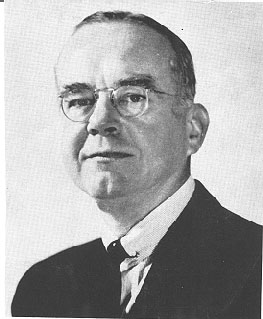 |
| James Burnham |
I think Burnham is right to note the similarities between different kinds of modernist political movements. I'll give examples later of technocratic attitudes in both communist Russia and liberal democratic Australia. First, though, it's helpful to continue with MacIntyre's account of technocracy and why it is so at odds with traditional ways of life:
The political formula of the managerial class is based on its expertise in the operation of large organizations and the efficiency they produce. In order to reliably deliver efficiency through massive bureaucratic institutions managers must impose uniformity. Small businesses, regional governments, and community organizations can mold themselves to the character of the people they serve and cater to the individual needs and tastes of their culture. Mass organizations, in contrast, generate their power due to scale, and to achieve that scale they require mass production and mass consumption. The cultural and moral particularities of a specific community, region, or even nation are a hindrance to the goal of maximizing the efficiency of mass production and consumption. Because those regional particularities represent a hindrance to the applications of managerial techniques, cultural homogenization is a key aspect of the managerial political formula.I'd like to hone in here on just two characteristics of technocracy identified by MacIntyre: size and expertise. As we will soon see, those who wish to manage society along technocratic lines have a contempt for smaller-scale social institutions run by amateurs. Technocrats prefer to operate on a mass scale but with authority invested in a small class of experts (so the vision, despite being oriented to a mass scale, is nonetheless elitist).
The radical left is a nexus of ideologies designed to break down the traditional structures of society. Structures like family and religion are the institutions through which troublesome regional particularities tend to be expressed and perpetuated. The deracinated individual stripped of all connection to faith, family, culture, or even gender serves as the perfect employee and consumer. Woke ideology may pay lip service to diversity but it dissolves the particularities that generate actual diversity. Total cultural homogenization is the logical consequence of progressivism and serves as the perfect medium for the fungible worker and consumer that larger managerial corporations crave.
The rest of MacIntyre's piece is very good and I encourage you to read it. For now, though, I am going to focus on reinforcing some of the points he has already made.
If we go back to the year 1932, we find the communist leader Leon Trotsky defending the attempt to abolish the family in the years after the 1917 Bolshevik Revolution:
The revolution made a heroic effort to destroy the so-called “family hearth” - that archaic, stuffy and stagnant institution...The place of the family as a shut-in petty enterprise was to be occupied, according to the plans, by a finished system of social care and accommodation: maternity houses, creches, kindergartens, schools, social dining rooms, social laundries, first-aid stations, hospitals, sanatoria, athletic organizations, moving-picture theaters, etc.
Note some of the key features of the technocratic mindset here. Trotsky doesn't like the scale of the family ("petty enterprise"). And he wants it to be replaced entirely by professional organisations ("a finished system of social care"). Trotsky, then, was as much a technocrat as the managerial class we have in the West today - despite the difference in political ideologies. Perhaps we should not be surprised, then, that the modern West has adopted much of the Bolshevik revolutionary programme, albeit in a more reformist way.
Fast forward to Australia, 1942, just a year after Burnham's book on the managerial revolution was published. This was the year that the decision was made to end the Anglo-Australian identity and to replace it with a more heterogeneous population (but still European). What is noteworthy is that the decision was made, in part, by a group of technocrats, such as economists and planners, in an "Inter-Departmental Committee". They had growth targets they wanted to meet and they believed that the fertility rates (depressed in the 1920s and 30s at the end of the long first wave of feminism) in Australia were too low to meet these targets.
It is also noteworthy that the politician most in favour of the change, Arthur Calwell, believed that maintaining the status quo would leave Australia as "a dull inbred country of predominantly British stock" - which expresses a similar mentality to Trotsky in his complaint that the traditional family was archaic, stuffy and stagnant. The technocrats want a more open or "opened-up" social field to work on - not "inbred" or in Trotsky's words "shut in".
Let's move forward to 1993. An American secular humanist by the name of Thomas Flynn, just like Trotsky, wished to see the end of the family. Why?
We expect specialists to build our cars, raise our buildings, make our clothing, write our software - the list is endless. Perversely, only society's most precious products - us - are still entrusted to cottage industry. If society is falling apart as conservatives charge, perhaps the blame lies not with "alternative family structures" (more accurately, non-familial households) but simply with parents, single or married, rich or poor, for whom parenting could never be more than a hobby - pursued in naive isolation, abandoned just when one threatens to get good at it. While procreation and parenting remain yoked, most children are doomed to be raised by amateurs...
The family, our last cottage industry, must go!
Looking Backwards - Issuing A Challenge
In 1888 Edward Bellamy published the utopian novel Looking Backwards, 2000-1887. Bellamy predicted that by the 21st Century capitalism, home, and family would be forgotten. Generations of reformers imbibed Bellamy's vivid images of happy workers who lived in dorms and ate in refectories, of children raised in large cohorts by gifted mentors, and dreamt that this was the shape of things to come. Science-fiction masters like Robert A. Heinlein, Isaac Asimov, and others portrayed futures in which the family had been eclipsed by licensed, professionalized alternatives. Many progressives simply assumed that one day, if not too soon, parenting would be a career like any other. Those most capable of it would be trained to mentor armies of children not their own.
Flynn has gone all out here to put things on a technocratic footing. He wants the small-scale unit of the family to be replaced by "children raised in large cohorts" and by happy workers who lived not in homes of their own but in dorms. And who would be in charge? Not a loving father and mother but "licensed, professionalized alternatives".
(I can't help but note here that Flynn's dream is being increasingly adopted in our education system. There is a gradually increasing expectation that teachers will not just teach a specialist academic subject but will take on an ever more ambitious mentoring role, i.e. teachers are being "trained to mentor armies of children not their own".)
So what are we to do? Some thoughts.
1. Rejecting a technocratic mindset doesn't mean going completely the opposite way. There are some things that have to be done to a certain scale, and expertise is necessary in some domains of human life.
2. There are, most likely, deeper beliefs underlying the technocratic mindset. For instance, if you believe in equality of outcomes in a radical way, then it will be difficult to accept the lack of uniform outcomes that occur in more traditional social settings. If people are raised mostly in a family setting, then some children will experience a better childhood than others and it will be difficult to "fix" this via bureaucratic interventions. Similarly, if you have a faith that science can be applied in all contexts to create desired social outcomes, you will most likely think in technocratic terms.
3. Perhaps even more important is the issue of our telos (our ends) as men and women. If you think, along more traditional lines, that these are realised significantly within a family and national setting, then this places limits on the value of technocratic organisation. Technocracy in some senses presupposes a radically individualistic view of human purposes. To adopt a technocratic mindset you need to see the core purposes of human life as being based not on the roles, identities and loves that arise within the family or nation, but on individual purposes within a mass setting (or, alternatively, you need to abstract the mass institution and pursue its measurable external goods - wealth or power - as an aim in itself).
What I am suggesting is that you cannot maintain the larger metaphysics of modernity and hope to permanently curb the worst aspects of technocracy. You can only defend the role of family and nation if it makes sense to do so within your larger world picture.
A note to Melbourne readers. If you are sympathetic to the ideas of this website, please visit the site of the Melbourne Traditionalists. It's important that traditionalists don't remain isolated from each other; our group provides a great opportunity for traditionalists to meet up and connect. Details at the website.
Links:
Auron MacIntyre on social media
Articles on the changes to Australian policy in the 1940s (here and here)