Showing posts with label distinctions. Show all posts

Sunday, May 18, 2025

Formless modernity

Patrick Deneen, in a conversation with Albert Mohler, made the following observation that has, I believe, a great deal to it:

I often think of a line in Alexis de Tocqueville's Democracy in America in which he says Americans, that is liberal democrats, will find forms to be abhorrent, they will always be opposed to forms. And what did he mean by that? 

Forms are that which create a shape or are a shape. Forms are all of the ways that, especially in nature but also not in nature, we draw distinctions. So you're [speaking to Mohler] dressed in a nice jacket and tie, I'm business casual, we would say you're more formal and I'm more informal and if I were my students I'd be wearing a hoodie and the tendency is to move toward the more informal in liberal democracy. 

And so the same mechanism that leads us to have informal Fridays or informality in address or not to be addressed as professor or doctor but as Patrick or hey you or dude, all of these are manifestations of the same phenomenon that leads to the decrial of borders, that's a form, the nation is a form; that leads to the decrial of religion as opposed to spirituality; liturgy as opposed to just simply feeling and emotion that I have, or connection or spirituality that I have; and of course it leads to the denunciation of the idea that there is somehow in nature a man and a woman. 

So it seems an odd thing to claim but the move toward informality is not disconnected in its deepest philosophical form.

[From a YouTube video, "Regime Change? A Future Beyond Classical Liberalism and Its Legacy? - With Patrick J Deneen", from 50:28, see here]

In short, a denial of form in philosophy leads, logically, both to informality but also to "formlessness", i.e., to a rejection of distinction. And so we see things "ratchet" within liberal modernity toward both of these things.

Just to underline this connection, consider the etymology of the word "formal". It first made its appearance in the late 14th century:
"pertaining to form or arrangement;" also, in philosophy and theology, "pertaining to the form or essence of a thing," from Old French formal, formel "formal, constituent" (13c.) and directly from Latin formalis, from forma "a form, figure, shape"
So the word "formal" originally had a sense of the form or essence of things, i.e., of the quality that constituted a particular thing. So what then happens when you get an early modern philosophy that stridently denies the existence of forms or essences? You will get a gradual shift to the "informal" and from there an effort to overthrow distinctions that once constituted "form".

Professor Patrick Deneen

This happened very gradually in Western culture but was already being noticed in the early 1800s. Professor Deneen cited Tocqueville describing the US in the 1830s. It was exactly in this decade that the American feminist Sarah Grimke decried the existence of distinctions between the sexes:
We approach each other, and mingle with each other, under the constant pressure of a feeling that we are of different sexes...the mind is fettered by the idea which is early and industriously infused into it, that we must never forget the distinction between male and female...Nothing, I believe, has tended more to destroy the true dignity of woman, than the fact that she is approached by man in the character of a female.

... Until our intercourse is purified by the forgetfulness of sex...we never can derive that benefit from each other's society
Similarly, in 1811 the English poet Shelley wrote a letter to Elizabeth Hitchener in which he prophesied of differences between the sexes that,
these detestable distinctions will surely be abolished in a future state of being
In 1792 the English feminist Mary Wollstonecraft wrote that,
A wild wish has just flown from my heart to my head, and I will not stifle it, though it may excite a horse-laugh. I do earnestly wish to see the distinction of sex confounded in society
In 1820, the Austrian statesman Metternich observed of the liberals of his era that,
...one of the sentiments most natural to man, that of nationality, is erased from the Liberal catechism, and that where the word is still employed, it is used by the heads of the party as a pretext to enchain Governments, or as a lever to bring about destruction. The real aim of the idealists of the party is religious and political fusion.
The drive toward "fusion", i.e., toward a kind of oneness, is perhaps also a manifestation of the ratcheting of liberal modernity toward "informality" in the sense of indistinction. 

In recent times, the drift toward informality is clear enough. I can see it in my own profession of teaching. Students now mostly call teachers by their first name; the wearing of uniforms is becoming less common; teachers themselves often dress casually; and some schools have even stopped using the word "teacher" preferring terms like "facilitator". 

You can see the informality too in the way that girls often dress. Fashion is still a major interest to girls, but the way it is expressed is often casual and at least semi-androgynous. Teenage girls might typically dress in hoodies and tracksuit pants. These are clothes that do not express "form" in the sense of highlighting anything distinctly feminine. The lack of feminine form goes hand in hand with a casual sensibility ("relaxing into formlessness").

It's interesting to compare this with the traditional clothes worn in rural Europe ("Tracht" in the German speaking countries). These were very formal in the sense of making distinctions. The particular "Tracht" that was worn might show a person's occupation, marital status, social class, religion and home town, as well as being very distinct in terms of one's sex.

This topic also reminds me of a video I saw a few years ago in which a glamorously dressed woman (showing "form") walked through a shopping mall in a European city filled with very indistinctly dressed people, who looked at her with a degree of perplexity. 


The many and the few

Professor Deneen sometimes talks about a tradition in classical thought (going back to Aristotle) which focuses on the problem any society faces of balancing the influence of the elite and the majority. Aristotle termed a society ruled by the few, but for the common good, an aristocracy, and a society ruled by the few for their own self-interest, an oligarchy. 

Clearly we have drifted in the modern West more toward an oligarchy. Our elites have chosen to define themselves against their own working classes. The elite only allows itself to be distinct, as a class, in terms of having values that the working-class does not. If the working classes are patriotic, they are globalist and so on. 

In the past, the elite were more aristocratic, in the sense that they held to an ethos of noblesse oblige, in which their privilege obligated them to certain responsibilities toward the larger society. And, in a society in which form was still possible, the elite could aim to be distinct through what was called "good form". Good form referred to the polite customs of dress, of speech, of manners and such like that a gentleman was thought to adhere to. This good form could be intricate, and might be thought burdensome by modern standards (an American was able to write an entire book about it in 1888), but it is a better way for an elite to identify itself than to set itself against its own majority, and it reflects something positive, namely that the culture still recognised form, rather than being committed to dissolving things into a formless mass.

Traditional Australia

It is possible that traditional Australian culture was more informal than elsewhere, at least in certain respects. There is a good side to this: it can make for friendly, sincere and relaxed social relationships. The traditionally warm and laid back Australian culture has its appeal.

Perhaps, though, we need to find a balance in this. A healthy society will inevitably have form, and therefore generate some level of formality. This is particularly true in certain social settings, for instance, in the interaction of men and women; in religious observance; in public office; in public ceremonies; in the arts; and in professional settings. 

Individuality

If you lived in nineteenth century England, when formality was still more present in society, it might have seemed that the rules of society were stifling to your individuality. To rebel against form, and to live like a Bohemian or a non-conformist, might have been thought to promote a freely expressed individuality.

But time has proven this false. We now live in a more formless age. And it has not led to a flowering of individuality. Rather, we have become uniformly formless. We have been made fungible: we live as interchangeable units of a mass society. Our sex no longer stands for much, nor does any part of our identity. 

In rejecting form we have jettisoned the aspects of self that connect us to the transcendent and that make us meaningfully distinct in our personhood. 

John Lennon wanted all the world to live as one; Shelley wanted to abolish distinctions; Metternich warned that liberal moderns wanted to abolish nationhood in favour of religious and political fusion. This is not the pathway to genuine individuality. We have travelled far enough down this road to know this. 

Forms represent essence and carry purpose and meaning. There must therefore be degrees of formality and distinctions in a healthy, well-functioning society. To become indistinct is not a welcome fate, but something to be firmly resisted.

Saturday, January 11, 2025

The levelling down of Western culture

I attended a seminar recently and listened to the keynote speaker for just a few minutes before predicting that he would be left-wing. Sure enough, later in the presentation he spoke about how important anti-sexism and anti-racism were to him and how sincerely he supported Aboriginal issues.

Why was I confident in predicting this? It was because of the way his mind operated. I wrote recently about how men's minds tend to run along a vertical axis, so that they are able to orient upwards toward things that are above one's own thoughts and feelings. Women's minds, in contrast, often run sideways along a horizontal axis and so can be attuned in a close in way to what others are thinking and feeling.

This man was intelligent, had masculine interests, and had a masculine systematising mind. But he was painfully sensitive to the thoughts and feelings of those in the audience. He worried that we might be upset about some of the things he would speak about, and he assured us we could take leave and go outside if we ever felt uncomfortable. At one point in the presentation he talked about the importance of safe spaces and the need to practise self-care. 

His mind was so attuned to that more feminine horizontal axis that I knew the vertical axis would be undeveloped. And without a vertical axis, I don't think it's very likely that a person will be genuinely traditionalist. It's not that everyone with that more upwardly oriented mind will be traditionalist, but it does have considerable predictive power.

And here's the issue. Most of the Anglo intellectual men I know are lacking in this power of the mind. They are masculine in certain respects; they are intelligent; and they are intellectually curious. But they have been deprived of any growth along the vertical axis. And this is at least a part explanation of why they are so hard to draw into a traditionalist politics.

So how might a society be organised so that this masculine power of the mind were better developed? The most direct path would be to explicitly teach a more traditional metaphysics. But this is not what I want to focus on. I want to consider what a culture that draws out this aspect of the mind might look like.

The basic principle here is that anything that draws our mind upwards to something higher than us, or larger than our own individual self, to which we are indebted, or which creates a sense of reverence or awe or love or respect, is helping to cultivate a power of the mind along that vertical axis.

I'm not going to attempt a complete list of what fits this criteria or put them in any kind of rank. But I would include a sense of pride in our own origins. If we feel connected to our own tradition, to our culture and to the achievements of our own people, then we have a love for something that extends across time through many generations; we respect the achievements of our forebears; and we feel a sense of duty to uphold standards that have been set for us. This is something that lifts us spiritually up along that vertical axis, to a good that exists independently of us but that draws out our commitments.

It is no accident that those who wish to embed a modernist "leveller" metaphysics so ruthlessly attack this sense of pride in origins. It is one of the key battles in any culture war. Here in Australia we lost that battle some decades ago and were made to feel ashamed. When I talk to young left-wing men it is obvious that this has had a considerable impact.

I would also point out that this type of patriotic feeling helps to develop masculine spirituality. For this reason, it is unwise for the churches to regard it negatively or to undermine it. As a positive example of how the churches have supported this higher aspect of the mind consider the Catholic catechism which teaches that the fourth commandment "requires honour, affection, and gratitude toward elders and ancestors".

A culture that develops the upward motion of the mind will also be oriented toward the heroic. Why? Because the heroic involves a selfless commitment to a larger good that we are willing to courageously defend. Or it denotes a kind of inspired action, sometimes via a test of skill or strength, that distinguishes character and leadership and which draws admiration. 

To illustrate how flattened our sense of the heroic has become consider these statues located very close to each other in the Melbourne CBD. The first is of the explorer Matthew Flinders. Erected in 1925, it shows a dignified and determined man with the sailors on either side pushing the boat forward representing strength and endurance. 


The second group of statues was commissioned in 1994 to honour three of Melbourne's founding fathers, namely Batman, Swanston and Hoddle. It is, at best, whimsical.


The point of embedding the heroic within a culture is not to encourage self-aggrandizement, or to focus on the achievement of fame as a life goal. It is to encourage that sense men have of wanting to push into the higher reaches of their own nature and to achieve some higher good in doing so. It is an encouragement toward a nobility of character and purpose. And, in setting high standards, it pushes men to consider higher goods embedded within the reality of existence that a man might embody. 

Architecture can reflect the kind of axis that a community is most oriented toward. It is notable that traditional church architecture here in Melbourne emphasised spires, presumably reflecting an upward orientation, as with St Patrick's Cathedral:


Whereas the modern parish churches look more like halls, which perhaps might encourage a sideways orientation on fellowship, but not reverence or awe:


While on the topic of churches, worship itself can potentially develop that upward orientation of the mind. Worship helps develop the vertical power of the mind when it is reverent, when it encourages a sense of the sacred, and when it expresses gratitude and indebtedness to God. There is room too for cultivating fellowship in worship, which represents the more horizontal axis of the mind, but if this is made dominant, then there is a loss of balance, i.e., the modernist "levelling" influence has made itself felt.

The attitude a society has to male authority figures will also reveal how much it has succumbed to a leveller ethos. The father is the most common male authority figure, and he represents the larger ordering principles within society and within reality. As Lawrence Auster put it:

Symbolically, the father is the structuring source of our existence, whether we are speaking of male authority, of the law, of right and wrong, of our nation, of our heritage, of our civilization, of our biological nature, of our God. All these structuring principles of human life, in their different ways, are symbolically the father.

This explains why children who rebel against their own father will often similarly rebel against the larger society. It is notable, for instance, how many leaders of second wave feminism did not have a good relationship with their fathers, often because those fathers were absent: 

Germaine Greer: wrote a book titled Daddy We Hardly Knew You.

Kate Millett: her father abandoned the family to live with a nineteen-year-old.

Eva Cox: her father left the family to pursue a relationship with a pianist "leaving an embittered wife and a bewildered and rebellious daughter".

Jill Johnston: her father left when she was a baby. She wrote a book titled: Mother Bound: Autobiography in Search of a Father.

Gloria Steinem: she said of her father that he "was living in California. He didn't ring up but I would get letters from him and saw him maybe twice a year".

Rebecca West: her father left when she was three, both she and her two sisters became radical feminists.

Mary Eberstadt explained much of the fury of the BLM riots in the USA in 2020 along these lines:

Like Edmund in King Lear, who despised his half-brother Edgar, these disinherited young are beyond furious. Like Edmund, too, they resent and envy their fellows born to an ordered paternity, those with secure attachments to family and faith and country.

That last point is critical. Their resentment is why the triply dispossessed tear down statues not only of Confederates, but of Founding Fathers and town fathers and city fathers and anything else that looks like a father, period...It is why bands of what might be called “chosen protest families” disrupt actual family meals. It is why BLM disrupts bedroom communities late at night, where real, non-chosen families are otherwise at peace.

She connects the leaders of the BLM movement to a history of fatherlessness:

The author of the bestseller White Fragility was a child of divorce at age two. The author of the bestseller So You Want to Talk About Race reports that her father left the family and broke off contact, also when she was two. The author of another bestseller, Why I’m No Longer Talking to White People About Race, was raised by a single mother. The author of another hot race book, The Anti-Racist: How to Start the Conversation About Race and Take Action, was raised by his grandmother. Colin Kaepernick’s biological father left his mother before he was born, but he was then adopted and raised by a white family. James Baldwin, a major inspiration for today’s new racialist writers, grew up with an abusive stepfather; his mother left his biological father before he was born. The list could go on.
So the father is a symbol for a larger order that includes family, faith and patria ("fatherland"). Our word "piety" is derived from the Latin word "pietas" which included honouring not only your own father but all those responsible for your existence, including God and your own people. So Mary Eberstadt is expressing a long tradition in Western thought when she connects filial piety not only to a respect for our own father but also a loyalty toward God and country as well.

Our society clearly has issues with male authority figures. Since about the 1980s, fathers have been portrayed in popular culture as, at best, loveable but harmless figures of fun. Worse has been the attitude of certain feminists, who have portrayed fathers as figures of violence and oppression, as did Kate Gilmore when appointed to lead the Keating Government's gender campaign in 1994:
You can see the tyrants, the invaders, the imperialists, in the fathers, the husbands, the stepfathers, the boyfriends, the grandfathers, and it’s that study of tyranny in the home ... that will take us to the point where we can secure change.

When we level down society, by casting down male authority figures, we lose access to the vertical structure of reality, in particular through the undermining of filial piety. It is important to note, however, that there is a balance here too between the vertical and the horizontal. Fathers, for instance, will not be held in esteem if they only claim a place in their children's lives through being in a position of authority. Fathers need to build warm human relationships with their children as well. Similarly, those men who occupy positions of authority in society need to be careful not to abuse their power or else trust will be catastrophically lost.

What else indicates the distinction between vertically oriented traditional societies and horizontally oriented modernist ones? Well, certain types of standards. For instance, most traditional cultures recognise different degrees of formality. This makes sense if you have a hierarchical understanding of reality, i.e., one that points upwards. It also makes sense in a society which believes in honour, i.e., in showing respect and in keeping faith. 

And so a traditional society will maintain distinctions of sorts. There might be certain courtesies. There might be titles of address. There might be ceremonies and rituals. Different levels of politeness, including of speech. 

There is a balance to be held here as well. Too much of this can be stifling and create too much social distance (and provoke a backlash). But the general trend in modern societies is, again, to level things down. We have lost the courtesies between men and women. School students increasingly address teachers by their first name. Formal dress standards are not what they once were. This might not seem much in itself, but the issue is what it points to. By continuing to collapse "degrees and distinctions" we are losing access to one dimension of reality.

Standards of conduct are also relevant here, or at least when they uphold a genuine moral good or virtue. When we abide by these we are acknowledging a higher good that has a claim on us - we are lifting the horizons of the reality we inhabit. And so in traditional societies there will be social norms and taboos that will be generally respected as meaningful. 

Again, the general trend in modern levelling societies is toward a loss of standards. If anyone doubts this I suggest they listen to the lyrics of many of the popular songs of today. What is expressed is undeniably crude, as if there were no meaningful standards, which, if true, would mean no higher moral dimension standing above us. There would be a flattening of the reality we inhabit.

I don't believe traditionalists need to go to any extremes in countering all this. What I'm suggesting is that the metaphysics that young intellectual men are brought up with leads them to an understanding of the world that lacks a vertical dimension, and that this is then reflected in the culture and in their politics (with the cultural changes then reinforcing the difficulties they have in relating to traditional ways of being). It is one reason why they come across at times as "mentally blind", in the sense of not being able to comprehend what it might be like to have a sense of loyalty or of patriotic feeling, or, for that matter, to genuinely register the transcendent experiences of life.

Sunday, October 01, 2023

A change of heart on men?

Most leftists today are opposed to masculinity, often prefacing it with the adjective "toxic". Their opposition makes sense given their understanding of both freedom and equality.

If you understand freedom as a self-determining, self-positing individual autonomy, then masculinity will be looked on negatively as something predetermined that is limiting to the individual.

As for equality, moderns see this as a levelling process, in which the emphasis is on "sameness" - we are ideally to stand in the same relation to each other, which then requires distinctions to be negated, at least in certain political contexts.

So leftists will sometimes reject masculinity because it is associated with inequality: masculinity is thought to have been constructed as a means to give men privilege and dominance and to oppress women. And sometimes leftists reject masculinity because it is restrictive, e.g. because of the implication that there are social roles or ways of being in the world that are for men alone.

These attitudes have been around for a long time now. In one of the earliest feminist tracts, The Vindication of the Rights of Woman (1791), Mary Wollstonecraft writes,

A wild wish has just flown from my heart to my head, and I will not stifle it, though it may excite a horse-laugh. I do earnestly wish to see the distinction of sex confounded in society... For this distinction...accounts for their [women] preferring the graceful before the heroic virtues.
Here you can see the modern understanding of both liberty and equality. She wants to level down the distinctions between the sexes (equality) because she wants to choose a masculine way of being (liberty). 

Similarly, we have Shelley writing in 1811, in reference to men and women:
these detestable distinctions will surely be abolished in a future state of being.

Given this long entrenched approach to masculinity, it is of particular interest that a leftist journalist, Christine Emba, has questioned the modern rejection of masculinity. She has written an opinion piece for The Washington Post ("Men are lost. Here's a map out of the wilderness" July 10, 2023), in which she calls for a more positive embrace of the masculine. Why would she go against the current of leftist thought in this way?
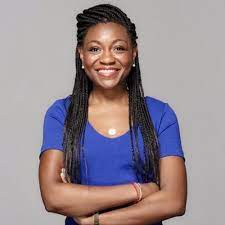
Christine Emba

She gives multiple reasons and these should interest us because they indicate some of the deficiencies in modern ways of thinking about our sex. 

First, as a heterosexual woman she is concerned that unmasculine men are unattractive dating prospects:

She quotes a podcaster, Scott Galloway, who makes the point that women who want men to be more feminine often don't want to date such men:

“Where I think this conversation has come off the tracks is where being a man is essentially trying to ignore all masculinity and act more like a woman. And even some women who say that — they don’t want to have sex with those guys. They may believe they’re right, and think it’s a good narrative, but they don’t want to partner with them.”

I, a heterosexual woman, cringed in recognition.
She wrote the piece, in part, because of laments from female friends about the lack of dating opportunities:
It might have been the complaints from the women around me. “Men are in their flop era,” one lamented, sick of trying to date in a pool that seemed shallower than it should be.

So here is a fundamental problem with the leftist rejection of the masculine. Heterosexuality is, by definition, an attraction of the masculine and the feminine. Women will therefore be sexually attracted to masculine qualities of men. Furthermore, it is through their masculine drives that men make commitments to women and to family. So the political commitments of leftist women (to modern understandings of liberty and equality) are set against fundamental aspects of their own being as women (their sexuality and desire for committed relationships with men). 

Second, Christine Emba is concerned that men are struggling. She makes the good point that women should be concerned for the welfare of the men they are closely connected to:

The truth is that most women still want to have intimate relationships with good men. And even those who don’t still want their sons, brothers, fathers and friends to live good lives.
She does not believe that modernity is delivering good lives to men:
I could see a bit of curdling in some of the men around me, too.

They struggled to relate to women. They didn’t have enough friends. They lacked long-term goals. Some guys — including ones I once knew — just quietly disappeared, subsumed into video games and porn...

It felt like a widespread identity crisis — as if they didn’t know how to be.

...Growing numbers of working-age men have detached from the labor market, with the biggest drop in employment among men ages 25 to 34. 

Then there’s the domestic sphere. Last summer, a Psychology Today article caused a stir online by pointing out that “dating opportunities for heterosexual men are diminishing as relationship standards rise.” 

...women are “increasingly selective,” leading to a rise in lonely, single young men — more of whom now live with their parents than a romantic partner. Men also account for almost 3 of every 4 “deaths of despair,” either from a suicide, alcohol abuse or an overdose.

...cut loose from a stable identity as patriarchs deserving of respect, they feel demoralized and adrift. The data show it, but so does the general mood: Men find themselves lonely, depressed, anxious and directionless.

What she is pointing to here is that our sex is deeply connected to our identity, our sense of purpose and our social commitments. Therefore, to malign masculinity and to make it inoperable in society is to undermine the larger welfare and well-being of men. For this reason, it is not liberating for a man to live in a society that is designed for androgyny.

Third, and less important for my argument so I will not dwell on it, she is concerned that if the left simply rejects the masculine that the right will step in and provide the leadership that is otherwise lacking. In other words, she fears that the left will simply vacate the field for the right.

Fourth, she makes a partial acknowledgement that our sex is grounded in reality:

But, in fact, most of these features are scaffolded by biology — all are associated with testosterone, the male sex hormone. It’s not an excuse for “boys will be boys”-style bad behavior, but, realistically, these traits would be better acknowledged and harnessed for pro-social aims than stifled or downplayed. Ignoring obvious truths about human nature, even general ones, fosters the idea that progressives are out of touch with reality.

This is an interesting admission, but she herself is not consistent here. It is very difficult for a leftist to hold together, at the same time, the observation that our sex is a "truth about human nature" with the idea that "freedom means being able to self-determine who we are". 

This is her effort to force these two incompatible ideas together:

The essentialist view...would be dire news for social equality and for the vast numbers of individuals who don’t fit those stereotypes. Biology isn’t destiny — there is no one script for how to be a woman or a man. But...most people don’t actually want a completely androgynous society. And if a new model for masculinity is going to find popular appeal, it will depend on putting the distinctiveness of men to good use in whatever form it comes in.
“Femininity or masculinity are a social construct that we get to define,” Galloway concluded. “They are, loosely speaking, behaviors we associate with people born as men or born as women, or attributes more common among people born as men or as women. But the key is that we still get to fill that vessel and define what those attributes are, and then try and reinforce them with our behavior and our views and our media.”

If this is an awkward way of formulating things, Christine Emba does do a reasonable job in defining desirable masculine traits. For one thing, she rejects the idea that a positive masculinity should be men trying to be feminine:

To the extent that any vision of “nontoxic” masculinity is proposed, it ends up sounding more like stereotypical femininity than anything else: Guys should learn to be more sensitive, quiet and socially apt, seemingly overnight. It’s the equivalent of “learn to code!” as a solution for those struggling to adjust to a new economy: simultaneously hectoring, dismissive and jejune.

She begins her treatment of desirable masculine qualities by quoting Scott Galloway:

“Galloway leaned into the screen. “My view is that, for masculinity, a decent place to start is garnering the skills and strength that you can advocate for and protect others with. If you’re really strong and smart, you will garner enough power, influence, kindness to begin protecting others...”

Richard Reeves, in our earlier conversation, had put it somewhat more subtly...His recipe for masculine success echoed Galloway’s: proactiveness, agency, risk-taking and courage, but with a pro-social cast.

This tracked with my intuitions about what “good masculinity” might look like — the sort that I actually admire, the sort that women I know find attractive but often can’t seem to find at all. It also aligns with what the many young men I spoke with would describe as aspirational, once they finally felt safe enough to admit they did in fact carry an ideal of manhood with its own particular features.

Physical strength came up frequently, as did a desire for personal mastery. They cited adventurousness, leadership, problem-solving, dignity and sexual drive. None of these are negative traits, but many men I spoke with felt that these archetypes were unfairly stigmatized.

The discussion of masculinity here is a good one overall. What is particularly striking is the acceptance that men might set out to garner power and influence to put themselves in a position to protect others, as this is a departure from the "zero sum game" attitude to relationships that I have criticised in the past. It is typical for feminist women to see power in liberal terms as a means to enact our desires in whatever direction we want, without negative judgement or consequence ("empowerment"). But if you see power in these terms, then it becomes a means to have my own way rather than someone else having theirs. Therefore, if men have power, women will be thought to lose out and vice versa. There is no understanding in this view that men might use power to protect those they love rather than to act in a self-interested way that deprives others. 

In other words, Christine Emba has a better anthropology here than most of her left-wing colleagues.

However, I do think the discussion of masculinity could be extended. Its focus is on men being good providers and protectors. This leaves out aspects of masculinity that are rarely defended.

Reality is marked by a tendency toward entropy, both in the individual and society. By this I mean a declining energy to uphold order, so that there is a slide into decay and chaos. One of the higher missions that men have is to resist entropy, both within their own person and in the communities they belong to. The opposite of entropy, or "reverse entropy", is "negentropy" - in which things become increasingly better ordered. 

The task of bringing the individual and the community into negentropy is not an easy one. It is necessary to consider, and to find ways to harmonise, the tripartite nature of existence, namely the biological, social and spiritual aspects of our natures. It requires also a capacity for prudence - for considering the likely consequences of measures that are undertaken; an ability to rank the goods of life in their proper order; an awareness of both the good and the evil that exists within our own nature; a capacity to learn from history and past experience; and an intuitive grasp of what constitutes the human good and rightly ordered action.

In short, what is required is a certain kind of wisdom. The instinct to exercise this kind of wisdom in the leadership of a community is given most strongly to men. You can see this when it comes to feminism. This movement is, and always has been, a "partial" one, in the sense that it is oriented to issues relating to one part of society only. Nor has it ever taken responsibility for upholding the larger social order or for conserving the broader tradition from which it emerged. It is there to "take" or "demand" rather than to order and uphold. 

One of the problems with masculinity in the modern world is not only the undermining of the provider and protector roles, but even more notably that of wise leadership. The fault for this does not lie entirely with feminism. 

Political liberalism hasn't helped. If the purpose of politics is to maximise individual preference satisfaction, with all preferences being equally preferences and therefore of the same value, then how can a politician seek to rule wisely? It becomes difficult to make qualitative distinctions between different choices and different policies. Urging prudence might be condemned as discriminatory or even as "arbitrary". 

Even worse, I think, is the influence of scientism. In part this is because scientism places limits on what type of knowledge is considered valid. But more than this, modern science, in making the advances that it did, seduced Western men into looking for technological and technocratic solutions to social (and personal) problems. I am reminded of this quote from Signorelli and Salingaros:

Modern art embodies and manifests all the worst features of modern thought — the despair, the irrationality, the hostility to tradition, the confusion of scientia with techne, or wisdom with power, the misunderstanding of freedom as liberation from essence rather than perfection of essence.
I want to underline here the problem that Western man is so oriented to "techne" that he voluntarily withdrew from the field of wisdom, thereby making entropy inevitable.

One further problem is that Western thought became too focused on the poles of individualism and universalism. Wisdom comes most into play when considering the particular communities and traditions that the individual wishes to uphold. If all you care about is individual self-interest, or abstract, universal commitments, then wisdom can be at least partly replaced by "cunning" on the one hand or feelings on the other.

The ideal of the wise father lasted for a long time. It was still present in popular culture in the 1960s and 70s, for instance, in television shows like My Three Sons, Little House on the Prairie and even to a degree in The Brady Bunch. But then it was axed. In more recent decades, fathers have been allowed to be loveable, but never a figure who might wisely order or advise. 

The recent Barbie movie is a case in point. In that screenplay, the three wisdom figures are all female, but none of them have much to offer. The creator figure, for instance, tells Barbie that "I created you so that you wouldn't have an ending", i.e. that there are no given ends or purposes to her life. Barbie herself becomes a wisdom figure at the end of the film, but all she can advise Ken is that he is enough as he is. The men in the movie are uniformly of the "goofy" type that our culture prefers (the opposite of men having gravitas). So there is no-one who is truly fit to lead.

It is in this context that a figure like Jordan Peterson has become so prominent. He is a psychologist and so has status as someone within a technocratic field. But he has pushed a little beyond this, a little into the field of "wise father" dispensing life advice, and this is so missing within modern culture that it has catapulted him to fame. Christine Emba has noted precisely this, that despite the advice being a little thin, he is filling an unmet need:
In 2018, curious about a YouTube personality who had seemingly become famous overnight, I got tickets to a sold-out lecture in D.C. by Jordan Peterson. It was one of dozens of stops on the Canadian psychology professor turned anti-“woke” juggernaut’s book tour for his surprise bestseller “12 Rules for Life: An Antidote to Chaos.” The crowd was at least 85 percent male...

Surrounded by men on a Tuesday night, I wondered aloud what the fuss was about. In my opinion, Peterson served up fairly banal advice: “Stand up straight,” “delay gratification.”...Suddenly, the 20-something guy in front of me swung around. “Jordan Peterson,” he told me without a hint of irony in his voice, “taught me how to live.”

If there’s a vacuum in modeling manhood today, Peterson has been one of the boldest in stepping up to fill it.
I don't want to disparage Jordan Peterson's efforts because he is one of the first to take a step in the right direction. His instincts are right. Note the title of his book: "an antidote to chaos" - he understands that it is not just about "techne" but that men are to be a force for negentropy - for the harmonious ordering of the self and society, and that he has a role to play in providing wise advice to younger men. I might wish that he could draw more deeply on "logos", but even so he has made a welcome start.

Sunday, February 12, 2023

A false footing

In 1892 an Australian Christian socialist by the name of William Guthrie Spence gave a speech on the topic of "The Ethics of New Unionism".

He began by noting that the old unionists had rejected the individualism of the past to organise together to improve their wages and conditions. They did not, however, seek reforms outside of their own workplaces.

William Guthrie Spence

Spence wanted the new unionism to go further and to transform the world. In explaining this, Spence revealed himself to be a kind of transitional modernist, in that he mixed together certain more traditional concepts with others that we would recognise today as being modernist.

Like so many other leftists before (and after) him, Spence believed in the perfectibility of human nature:

I take it that the human family is inherently good. I go against that old idea of always crediting our human frailties to original sin. I say that humanity is inherently good if we only let it have a chance to exercise its goodness.

This is an optimistic account, but it leads him into dangerous territory. It allows him to believe that a change of the system in which men live, from a competitive to a cooperative one, will so perfect the nature of man that it will overcome all social ills and usher in a utopia. He does not hold back in expressing this belief:

If I understand anything of the teachings of the founder of Christianity it is that He came to bring heaven upon earth — to set up the kingdom of heaven on earth. I fully believe that we can make this heaven.

...Heaven is an ideal state where we escape from all the ills and sorrows that we experience here. In our present state we see many, very many cases of suffering and of trouble. We can trace its cause and see a way of removing it, and shall we sit idly by and allow the misery to go on? No, a thousand times no. Christ taught men that they could and should bring the kingdom of heaven upon earth. New unionism aims at giving practical effect to that, knowing full well that the inherent good in humanity, if it has an opportunity to expand, will rise, will become practical, and bind the people together.
This is the clearest example I have ever come across of "immanentizing the eschaton" which is defined as an attempt "to bring about utopian conditions in the world, and to effectively create heaven on earth."

This already suggests that Spence's Christianity has been modified by modernist ideas. It is not that Spence is entirely wrong in believing that the conditions people live under affect their behaviour. Nor is he wrong in thinking that Christians might attempt to ameliorate those conditions. But what matters now for Spence is a natural process (evolution) through which humanity acts of itself to create a heaven on earth. It is not far removed from a secular humanism.

When people start to see "humanity" as the significant centre of faith and vehicle of progress, they are likely to prefer a shift toward "higher unities" bringing people to believe in humanity as one larger whole, rather than smaller and localised forms of community. Spence says, for instance,

What is your life or my life worth, unless it has been exercised in doing something to add to the sum of happiness of the human family? Those who are conservative enough to let things run as they are of what use are they to the human family? They retard progress. There are now certain well-defined paths with which you can see the thoughts and actions of reformers are trending. Human energy has hitherto been exercised in a wrong direction. Shall we remove the obstacles and put it in the right direction.

There is no defence here of traditional institutions or ways of life, which now represent the "wrong direction" and are obstacles to be overcome by reformers. The worth of a life is no longer measured by a relationship to God, or service to family or nation, but by adding to the happiness of the entire human family.

His orientation to a single humanity is also expressed when he declares,

We are aiming now at securing an improvement by social and political reforms — and by that means alone a revolution will undoubtedly be effected in time. When I use the word revolution — do not misunderstand me — I mean a quiet one. It will be a change from one condition to the other, which almost deserves the name of “revolution.” I feel certain it will come about steadily and surely and rapidly if we take the proper stand, the only stand — that of common humanity.

He says here that the only stand is that of common humanity. He is consistent, then, when he insists that there should be no distinction of sex:

Women workers will also be included, for the spirit of “new unionism” makes no distinction of sex.
Spence likewise sounds very modern when talking about equality:
...co-operation instead of competition is one of the aims of the New Unionism; giving equality of rights, equality of opportunity, and equality of justice to all men.

I find it particularly interesting that Spence is already, as far back as 1892, expressing something of a technocratic mindset. He argues, for instance, that "In the future things must be done in the mass.'' As we shall see, he also argues for the principle of "efficiency". He is not yet, however, arguing for rule by experts; instead, he wants a landed aristocracy replaced by men of "character, genius and intellect".

In what ways does Spence sound more traditional? Well, his world picture is not yet entirely flat. There is still some sort of vertical hierarchy, of things more noble and more base. He states, for instance, that,
Humanity must, of course, be regarded as part of Nature, and are also influenced by the spirit of evolution. We have been placed at the very apex of the pyramid of created things.
He speaks also of his hopes that if people remove impediments to progress that there will be "an expansion of the good, of the noble, of the best. All these are qualities to be admired in man, and mark the distinction between the higher and lower in humanity." Similarly he later exclaims "The principles underlying this movement are those founded on eternal truth. They aim at giving exercise to the highest and very best qualities of human life and nature."

Spence's version of modernism has managed to withstand a naturalistic logic in which there is no order to creation and no means of distinguishing the high from the low. What Spence does share with the modernists, though, is a rejection of the good within the current order. If evolution is pushing toward heaven on earth, then it is important that reformers remove impediments to progress, which makes it wrong to conserve as a matter of principle. You can see here how politics then develops: there are "progressives" who will push for change in the belief that this will usher in a more perfect world and "conservatives/traditionalists" who are alarmed that the good that exists as part of an inherited tradition will be sacrificed and lost.

There is one final point to be made. In spite of his commitment to humanity as a whole, Spence was still very firmly an ethno-nationalist. As a founder of the Australian Labor Party he wrote:
The party stands for racial purity and racial efficiency — industrially, mentally, morally, and intellectually. It asks the people to set up a high ideal of national character, and hence it stands strongly against any admixture with the white race. True patriotism should be racial.

There is a hint here of the proto-technocratic mindset I wrote about earlier when he uses the phrase "racial efficiency". Spence was not alone among progressives of the time in supporting ethno-nationalism - so too did figures like Alfred Deakin and William Lane. The point I would make is that his overall worldview was unlikely, in the longer run, to support the continuation of an ethno-nationalism.

If you set up as an idea that there is a natural evolution of humanity toward a kingdom of heaven on earth; that conserving tradition impedes this progress; that the meaning of life is to serve the human family; that distinctions, such as those of sex, should not be admitted; and that there should be equality of rights and of opportunity for all men - then it will be difficult in the longer run to defend more particular and parochial inherited identities. 

I noted this already in a post on Alfred Deakin, a future Prime Minister. His biographer, Judith Brett, wrote that,

To him the larger, more unified view was always superior, higher and more evolved, less selfish and closer to the divine purpose than the narrow and parochial...
This is similar to Spence's idea that evolution will bring us ultimately to serve one human family. So how did Deakin justify his ethno-nationalism? Judith Brett believes it was simply left as a contradiction:
Liberal nationalism has an inherent contradiction. It speaks of the universal values of liberty and brotherhood, but it applies them to particular populations. Deakin was well aware of the contradiction: his prayer would be "wide as thy Universe...it would embrace all living things", "were not this to render it pointless and featureless", and so he narrowed his focus "to my kind, to my race, to my nation, to my blood, and to myself, last and least". A couple of years later he prayed for blessings "for my wife and children, family, country, nation, race and universe".
Future Labor politicians would, predictably, begin to extend the focus. Arthur Calwell in the 1930s, for instance, argued in favour of a greater diversity in the Australian population as a matter of equal opportunity and social justice and this led to the expansion of the migration programme after WWII. Calwell's focus did not extend beyond European migration, but by the late 1960s/early 1970s both Labor and Liberal politicians went full focus and adopted a policy of multiculturalism.

You cannot expect something to survive forever when it exists as an unprincipled exception to the larger worldview that you have adopted. If you want a traditional nation to continue, then your worldview needs to accept that there are things embedded within traditions that represent the good and that are worthy of conserving - and that the project of conserving is not just some reactionary offense against progress to an unlikely utopia.

Tuesday, October 20, 2020

Left behind

I ventured into left-wing Twitter recently. A poster had asked how his fellow left-wingers would describe those on the right in a single word. The most interesting answer was this:


I don't think this is right at all and said so:


It led to an exchange which made it clear that what traditionalists believe to be the common good differs greatly from the leftist understanding. The leftists pointed me to an article on Sweden the gist of which was the idea that Sweden was oriented to the common good up to the 1980s when the Social Democrats began to privatise the economy; it then led to a period of growing inequality which all sides of politics are now attempting to overcome.

Here is the leftist ideal:

The centre-left has governed the country for 81 of the past 100 years, striving to be “the people’s home” – or folkhemmet – in which the social democratic state was like a family, caring for all and with no one left behind. Sweden became one of the most socially equal countries in the world.


So the "common good" means that the state ensures social equality, which apparently means a levelling out of all kinds of distinctions - of class, of ethnicity, of sex:
Karl Möller seems an unlikely poster child for a war on inequality. He is the lone male among a dozen women, each with a baby in her arms.

Möller, 45, is part of a city-wide programme in Gothenburg to mix social classes, genders and ethnicities to make Sweden’s second city a more equal place to live.

New integrated “family centres” such as this one, which opened in March, aim to target support at the families who need it most. “It is important for us to be in mixed areas to create more equality,” says manager Helen Antonson.

This concept of a common good hasn't worked on its own terms - Sweden has seen a growing inequality in income and health for some time. Worse, though, is that the concept itself is misconceived: it dissolves many of the connections between people through which stable forms of community are formed. It therefore tends to create anomie and social withdrawal - an excessive individualism rather than community and a common good.

Consider the following graph comparing the percentage of lone person households in Europe in 2016: 


In Sweden the percentage is double some other European countries. In other parts of the world the corresponding figure is often under 10%:


Why do so many Swedes live alone? One Swedish historian put it this way:
Why, then, does Sweden stand out when it comes to the high number of single households? Trägårdh says that Sweden is a "radically individualistic" country with a social structure that enables people to live independently - that is, to avoid having to rely on one another.

"It has something to do both with values and with the types of institutions we have created in Sweden in more recent decades," explains Trägårdh.

"Individual autonomy has been important for a long time here."


To try to make what is happening here clearer, think of it this way. The Swedes are starting out with an individualistic view of man, i.e. that we create meaning for ourselves as autonomous, self-defining individuals. The "common good" part only comes later and consists of a commitment to a state sponsored egalitarianism, in which distinctions between people are levelled.

A traditionalist common good looks very different because it begins with our view of man, namely that our own good is inextricably intertwined with the good of the larger natural forms of community we belong to, and through which we obtain aspects of our identity, our social commitments, our roles and purposes, our loves and attachments, our connection to a particular culture and tradition, and our connection to generations past, present and future.

The leftist "common good" emphasises independence over interdependence and it wants to level away the distinctions on which a traditional common good is formed. As an example of this mindset, consider the way that Monica Silvell, a Swedish bureaucrat, explains the change of ideas about men and women in Sweden:

The old view of men and women complementing one another was replaced by the notion that the sexes were basically similar.

There is a levelling of distinctions ("the sexes were basically similar) and a loss of interdependence ("the older view of men and women complementing one another"). There is no "common good" here anymore, in the sense of the sexes needing each other to fulfil aspects of their own selves. The "common good" becomes, instead, something very different: a commitment to the egalitarian liberal state. As we have seen, this leftist "common good" tends to create "aloneness" rather than stable forms of community.